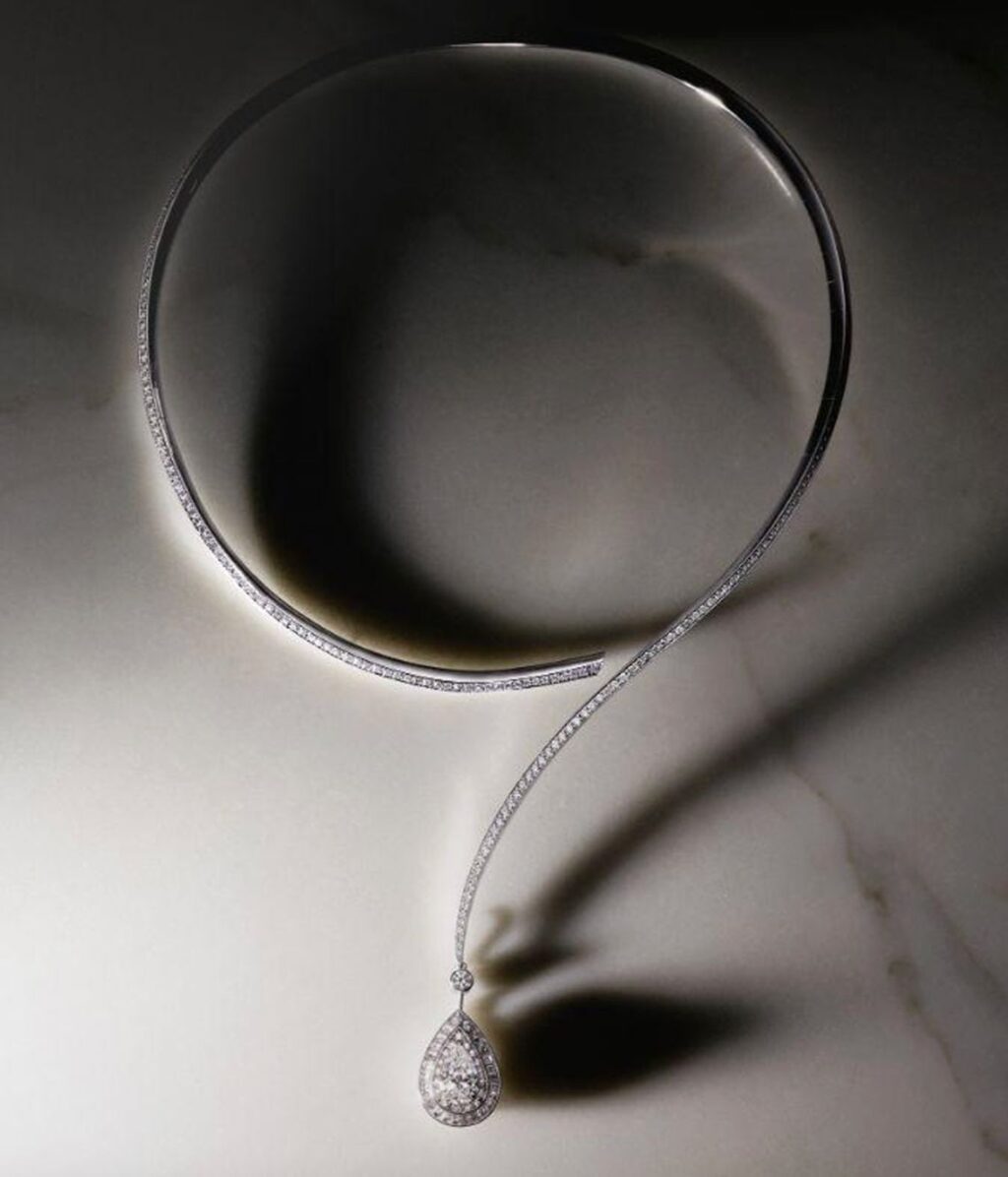
Goldsmiths’ Fair opens its doors in London this morning, kickstarting a two-week selling event that carries considerable commercial importance for Britain’s independent jewellery and silversmithing businesses.
The Fair, which will be held at Goldsmiths’ Hall from 22 September to 4 October and is backed by the Goldsmiths’ Company, will give 138 UK-based makers direct access to collectors, and for some exhibitors it represents a substantial proportion of their annual turnover. “In 2026, [Goldsmiths’ Fair] is unbelievably important,” says Harriet Scott, the event’s head of fair. “We’ve done various surveys on our makers asking them what percentage of their annual takings happen as a result of the fair, and it is worryingly too much, because we can’t guarantee a spot for everybody every year. If a business is hinging on us, that’s problematic.”

A vital route to market
Scott says that overreliance on Goldsmiths’ Fair reflects a wider structural challenge within the market for high-end jewellers and silversmiths. As the number of specialist galleries has declined, independent makers without permanent retail locations have fewer opportunities to reach serious buyers.
“We are working with independent makers [at Goldsmiths’ Fair],” notes Scott. “We’re not working with gallerists and big businesses, or people who have shopfronts. We’re working with people whose only other avenue of selling is now through social media, the internet, or any kind of fairs that they can get into, but it’s more and more difficult because the cost of a fair.”
Scott says that while Goldsmiths’ Fair charges its exhibitors to take part, the calibre of show, exposure to clients, marketing support, and wider national media campaigns that it delivers as part of the experience makes it cost effective. “The Fair is a huge loss-making exercise,” she says. “There’s no profit being made on our end at all. I would say what we spend, we make about half of that back through ticket sales and stand fees, which are very low in comparison to other places. We take no money from sales [made during Goldsmiths’ Fair]; that all goes directly to the makers. The [Goldsmiths’] Company builds that loss into its wider financial budget and we see it as just part of our raison d’etre.”

Precious-metals costs relax rules
Scott says she is confident that attendance at this year’s event should be level with 2025, with “ticket sales almost exactly on par with last year, or ever so slightly ahead”.
While Scott didn’t share forecasts on expected spending driven by the show, she did speak to the impact of rising precious metals prices – a topic so dominating in the industry and beyond that popular British radio show Woman’s Hour broadcast a segment on it after visiting last year’s Fair to quiz exhibitors about its impact.
“We’re constantly anticipating a shockwave because of the price of materials,” says Scott. And in response to this, Goldsmiths’ Fair is relaxing its rules around the use of precious metals at the event. Previously, exhibitors were required to only present work that contained an element of gold, silver, platinum or palladium. This year, Scott says visitors will likely see designs at the show that have no precious metals at all.
“In the conversations that are going on in committees, there is a sense that we can be open to conversations about it, especially given the [materials] price hikes in the last two years, because we don’t want to push creative minds out and shut them down before they’ve even started,” she says.

AI enters the craft debate
Alongside makers selling their work, Goldsmiths’ Fair will offer visitors the opportunity to experience an art installation by jeweller Silvia Weidenbach and artist Jon Emmony. Titled Black Box, the work will explore the relationship between artificial intelligence and traditional making.
The duo has photographed historic objects from the Goldsmiths’ Company Collection, and then added artistic handcrafted elements to the images through painting or illustrations. These were then fed into an AI programme to create a constantly regenerating film that will be shown across both Weeks of the Fair (Goldsmiths’ Fair is split into two weeks with the roster of designers refreshed at the mid-way point) to a backdrop of AI-generated music.
“There was this whole conversation about using AI as a tool and getting ahead of it rather than AI controlling us,” says Scott, who says discussions around AI remind her of similar conversations held within the industry at the advent of 3D printing. “We were all looking at 3D printing and saying, ‘it’s the end of our industry – that’s it’, and now it’s fantastic. [Weidenbach and Emmony] are exploring it in that way, but they’ve also got a really wonderful take on AI, full stop. To me, it is fun and exciting, and of the moment.”