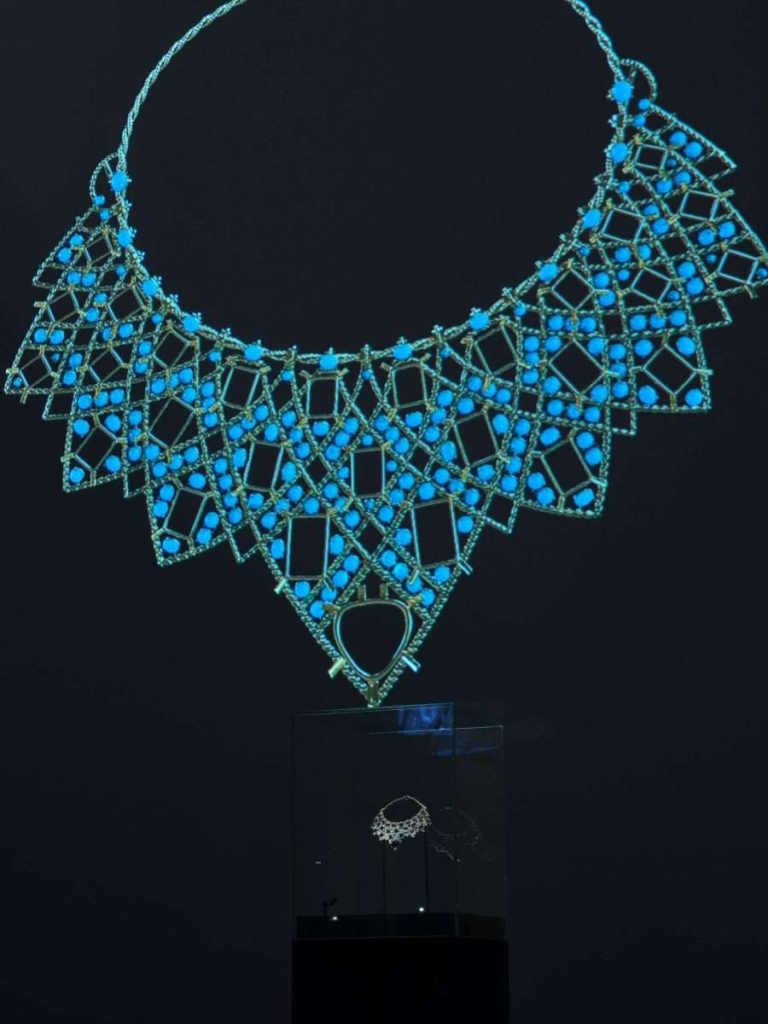
With Italian Roman roots, Bulgari began life in 1884, and was founded by a Greek silversmith called Sotirio Bulgari. It would become known for its craftsmanship and distinctive style. The Bulgari’s designs were full of vibrant colour, volume and unique emblems that would always pay homage to the brand’s roots in Rome.

The first store, on Via Sistina, would often be a destination for English tourists upon their Grand Tours at the time. More stores followed, one on Via Condotti. Sotirio’s sons Giorgio and Constantino would later join the business. It was at their suggestion the brand focus on high jewellery taking advantage of the family’s silversmithing legacy.
Fast forward to the 1920’s and early high jewellery pieces were noted for their French style and Art Deco design. But it wasn’t until the 1940’s that a more recognisable and Italian Bulgari style emerged. These were yellow gold and incorporated coils. Coloured stones and precious stones were introduced during the mid 1950’s and the cabochon would become a hallmark of the brand.
As the time of movie stars and socialites boomed, during the Dolce Vita age the store on Via Condotti became a popular place and helped the brand to become well known on the international stage. Elizabeth Taylor, Audrey Hepburn, Ingrid Bergman, Grace Kelly, Anita Ekberg are just a few of the names who would forever be linked to Bulgari jewels, both on and off the screen.

In fact, Bvlgari pieces have starred in more than 40 films, including Never So Few with Gina Lollobrigida, Casinò with Sharon Stone and Mission Impossible starring Tom Cruise. And, of course, many pieces have taken a wander up and down the red carpets of Cannes, the Oscars, Venice and more.
Expansion continued during the 1970s, to Europe and the US. Designs, such as the BULGARI BULGARI watch were soon noted classics. Though not advertised, it managed to make significant buzz. Its precursor was a digital and limited edition watch with “BULGARI ROMA” inscribed upon it, debuting in 1975. The engraved BULGARI BULGARI logo was integrated into the timepiece design. The inspiration for the BULGARI BULGARI came from ancient Roman coins, the effigy of the emperor was surrounded by inscriptions of power and prestige. Likewise the cylindrical BULGARI BULGARI case was inspired by the columns of Roman temples.
Modular and versatile jewellery that could easily waver between daytime and nighttime pursuits also became a strong feature. The Parentesi collection was the first of this kind and inspired by Rome. As did unconventional materials, which were incorporated into jewels and watches such as steel, porcelain, silk and wood. The idea of luxury was pushed during the 1980s.
A notable jewellery icon is Elizabeth Taylor. It’s no surprise to know that she, too, was a fan of Bulgari. Apparently it all began when she came to Rome to film Cleopatra and paid a visit to the shop.
In 2011, Christie’s auction house held a sale of Taylor’s private jewellery collection which set records. Bulgari re-acquired nine pieces and, as of today, they have become part of the Bulgari Heritage Collection.
Another element of the Bulgari heritage is flowers, which have been explored in various ways, colour, diamonds, the Tremblant brooches, and stylistic design. And one of its most celebrated jewellery icons is the Monete mounted antique coins. A longstanding tradition in jewellery dating back to Ancient Rome, the Monete jewels, which debuted in 1966, see the structure of the coin remain unaltered and the mounts following their contours. They are engraved with the name of the emperors, the dates they were in power and the type of coin they are.
The serpent is another well known hallmark of Bulgari and has been used in especially innovative ways when it comes to watches. During the 1960s, the watchcase was concealed in the head of one, making for a compelling reptilian design. This has continued to be explored ever since with the aid of the Tubogas technique. It is a flexible band with rounded contours which has been produced without soldering. Developed in the latter half of the 19th century, it was received by Bulgari in the 1970’s.

Priyanka Chopra Jones, Zendaya, Naomi Scott and Bella Hadid are among the famous faces who have fronted campaigns for the brand.