Las Vegas jewellery week is often treated as two separate shows – buyers and exhibitors tend to choose one over the other. Couture in the Wynn is where designers push boundaries. JCK, opposite in the Venetian is where the industry does its business. After walking both shows this year I noticed many similar themes whether it was a steel necklace at Couture, a watermelon tourmaline at JCK or a fancy yellow diamond as big as a sugar cube. Separating all these things out I realized I kept seeing the same things.
Read our story on the trends at Couture here
Gold was everywhere. So were unusual gemstones. Designers embraced unusual metals and materials – titanium, steel, enamel and carbon fibre, while natural diamond producers doubled down on rarity, provenance and colour. At surface level this didn’t appear related but actually what brands and suppliers were doing was saying – how do you create something special when perfection can be manufactured.
Gold is having a moment
“Gold is the new diamond.” This was a throwaway remark from Jessica Busiashvili of OX at Couture, but after a week spent walking the show floors it felt like the statement of the show.
Conventional wisdom suggests record gold prices should encourage designers to use less precious metal. Instead, the opposite seemed to be happening. At Couture and JCK, brands including FOPE, Anita Ko and Gabriel & Co. showcased jewellery where gold was no longer simply the supporting act. Heavy chains, substantial cuffs and sculptural forms put the precious metal at centre stage. Bold yellow-gold pieces appeared across both established brands and independent designers.
The appeal seems obvious. Gold offers something increasingly rare in luxury, permanence. It has intrinsic value, finite supply and centuries of cultural significance. In a market increasingly focused on rarity, those qualities matter. Not everyone agreed on the solution, however.

Alternative materials move into luxury
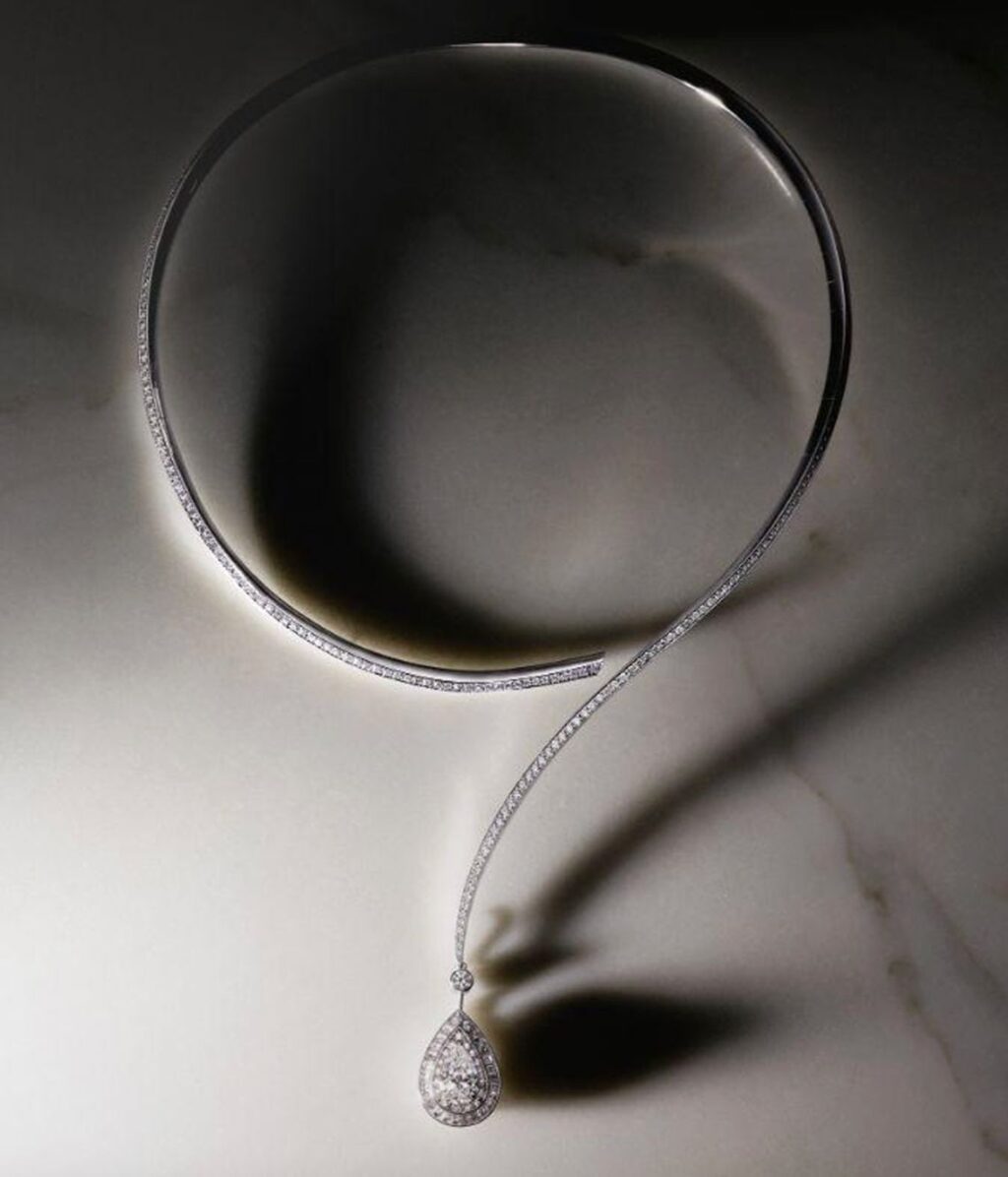
If one half of Couture doubled down on gold, the other looked elsewhere. Titanium, steel, silver, enamel and mixed metals appeared throughout the show. Roberto Coin experimented with diamond-set steel, while Vhernier continued its exploration of titanium and gold combinations. Elsewhere, enamel brought colour and craftsmanship to pieces that felt closer to art than traditional fine jewellery.
Interestingly these materials were not being used as substitutes for luxury. They were being used to redefine it. Titanium offers lightness. Steel creates contrast. Enamel introduces colour and narrative. Rather than competing with gold, these materials expand creative possibilities.
The result was a Couture show that often felt split into two camps: those celebrating the scarcity of precious metals and those embracing new materials altogether. Lastly, where previously gold was decorated by diamonds now we were seeing designers populate other metals with gold details and finishes.
Jewellery is becoming more personal
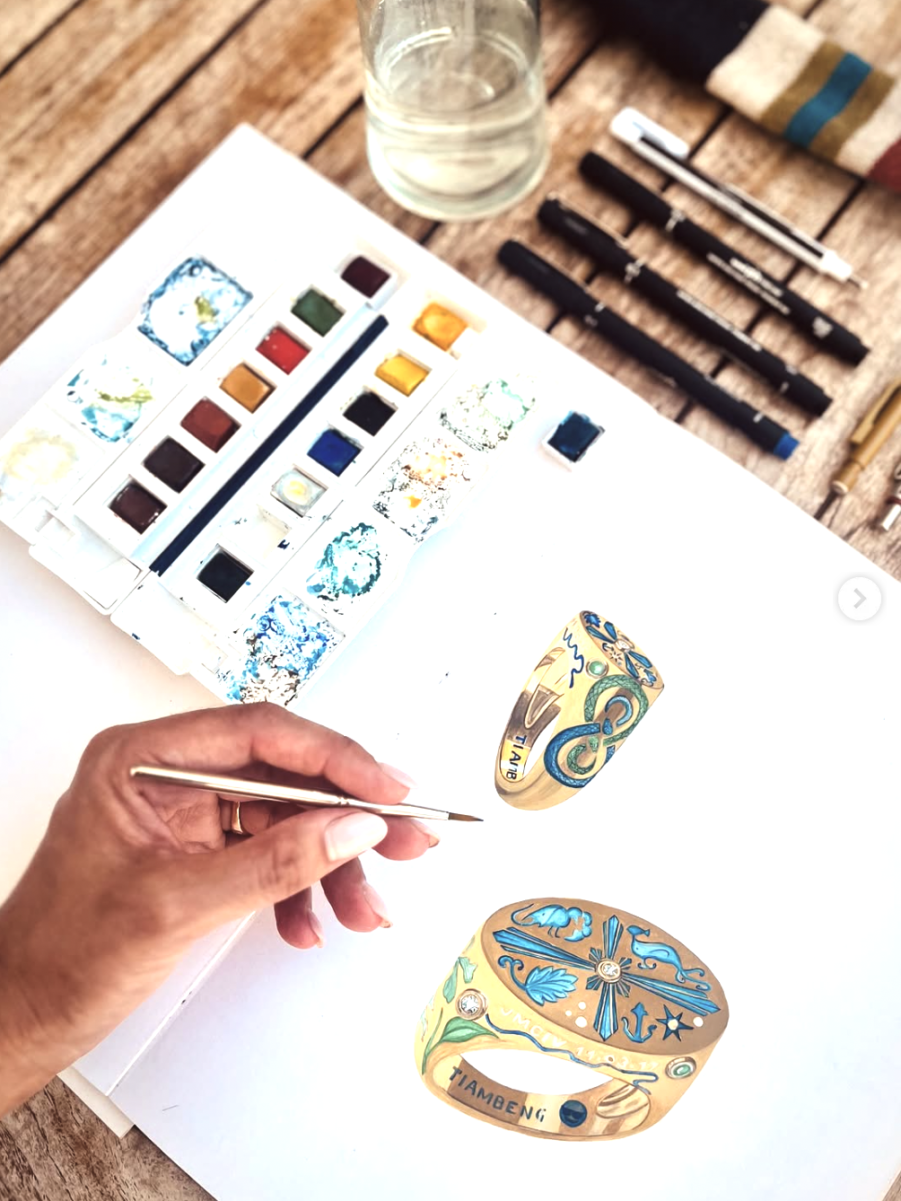
Away from the major luxury houses, another trend was quietly gathering momentum. At Couture, brands such as Marie Lichtenberg, Cultus Artem and Francesca Villa built collections around storytelling and personal symbolism. Pennants, dice, cameos and western-inspired motifs transformed jewellery into something more narrative and personal.
The same spirit could be found within JCK’s Design Collective. Designers created miniature landscapes, sculptural objects and one-of-a-kind jewels that felt closer to wearable art than traditional fine jewellery. Wolfgang Vaatz and Lauren Newton created whimsical landscapes and objets d’art. Consumers are buying stories, identities and pieces that feel unique.
Unusual gems stealing the spotlight
If there was one visual trend that connected Couture and JCK, it was colour. Not simply emeralds and rubies, but gemstones with character. Watermelon tourmalines, Montana sapphires, rubellites, gem silica and boulder opals appeared throughout the shows, often taking centre stage over more traditional stones.
At New York jeweller Le Vian, Montana sapphires and watermelon tourmalines featured prominently alongside the brand’s signature Chocolate Diamonds. Elsewhere, independent designers showcased gem silica and unusual lapidary work that celebrated the individuality of each stone rather than striving for uniform perfection.
For years the jewellery industry focused on standardisation. Vegas suggested the pendulum may be swinging in the opposite direction. Character, rarity and distinctiveness increasingly matter.
Natural diamonds fight back
For all the experimentation with materials and coloured gemstones, natural diamonds remained central to the conversation. “Natural diamonds have been on fire,” Eddie LeVian told me at the Le Vian Red Carpet Revue on Sunday night.
It was a sentiment repeated throughout JCK. Few exhibitors denied that lab-grown diamonds had established themselves as a category. What many questioned was whether they could ever replicate the emotional appeal of something formed deep within the earth billions of years ago.
What was striking was not simply the number of natural diamonds on display, but the confidence with which exhibitors discussed them. Again and again, the same argument surfaced. Lab-grown diamonds may have established themselves in fashion jewellery, but larger purchases continue to be driven by natural stones.
That sentiment was reflected in the products themselves. Fancy yellow diamonds were everywhere. Rahaminov showcased extraordinary natural yellow stones, while Le Vian continued to build on the success of its Chocolate Diamonds. De Beers’ Desert Diamonds programme, meanwhile, is built around the appeal of naturally coloured stones whose hues immediately distinguish them from their laboratory-grown counterparts.
That confidence was shared by many dealers on the floor. Benjamin Orner from GM Diamonds framed the debate differently. Rather than focusing on price, he focused on time. He told me, “You can’t compare something you make in a microwave that just came out five years ago with a natural diamond that took billions of years to form.”
His argument was that the industry has been here before. Cubic zirconia disrupted the market. Synthetic gemstones disrupted the market. Yet natural diamonds remained. “Natural diamonds aren’t going anywhere,” he said. “They’re going to continue to be one of the Earth’s rarest forms of beauty.”
The industry’s message was becoming increasingly clear. It no longer wants to compete with lab-grown on perfection. It wants to compete on rarity.
Provenance is the new luxury
Rarity, however, is only part of the story. Across Vegas, brands increasingly emphasised traceability, origin and transparency. At the Diamonds do Good event Tiffany & Co.’s Corporate Sustainability lead Annika Dubrall highlighted its traceability initiatives – their diamonds are 99.999% traceable to their mine of origin. De Beers continued to invest in Origin. At the Diamonds Do Good awards, conversations focused not only on gemstones but on the communities and countries behind them.
In a world where products can be replicated with increasing ease, provenance itself has become part of the luxury proposition. Customers are no longer simply asking what a stone is. They are increasingly asking where it came from, who mined it and what impact it had along the way. It became increasingly obvious that for the communities in Botswana and Namibia involved in diamond mining that it had improved their livelihoods immeasurably.
Unique beats perfect
The biggest trend in Vegas though was not gold, titanium, watermelon tourmalines or natural diamonds. It was rarity. Some brands expressed it through precious metals. Others through unusual gemstones, craftsmanship, provenance or billion-year-old natural diamonds. Yet all were responding to the same challenge. How do you create something genuinely special when perfection can be manufactured?
Across Couture and JCK, the answer appeared remarkably consistent. In a world where manufactured can create perfection – unique, it seems, has become more valuable than perfect.
For more read The Week That Clarified Everything: Jewellery Is the Main Event
For the latest jewellery news Subscribe to our newsletter