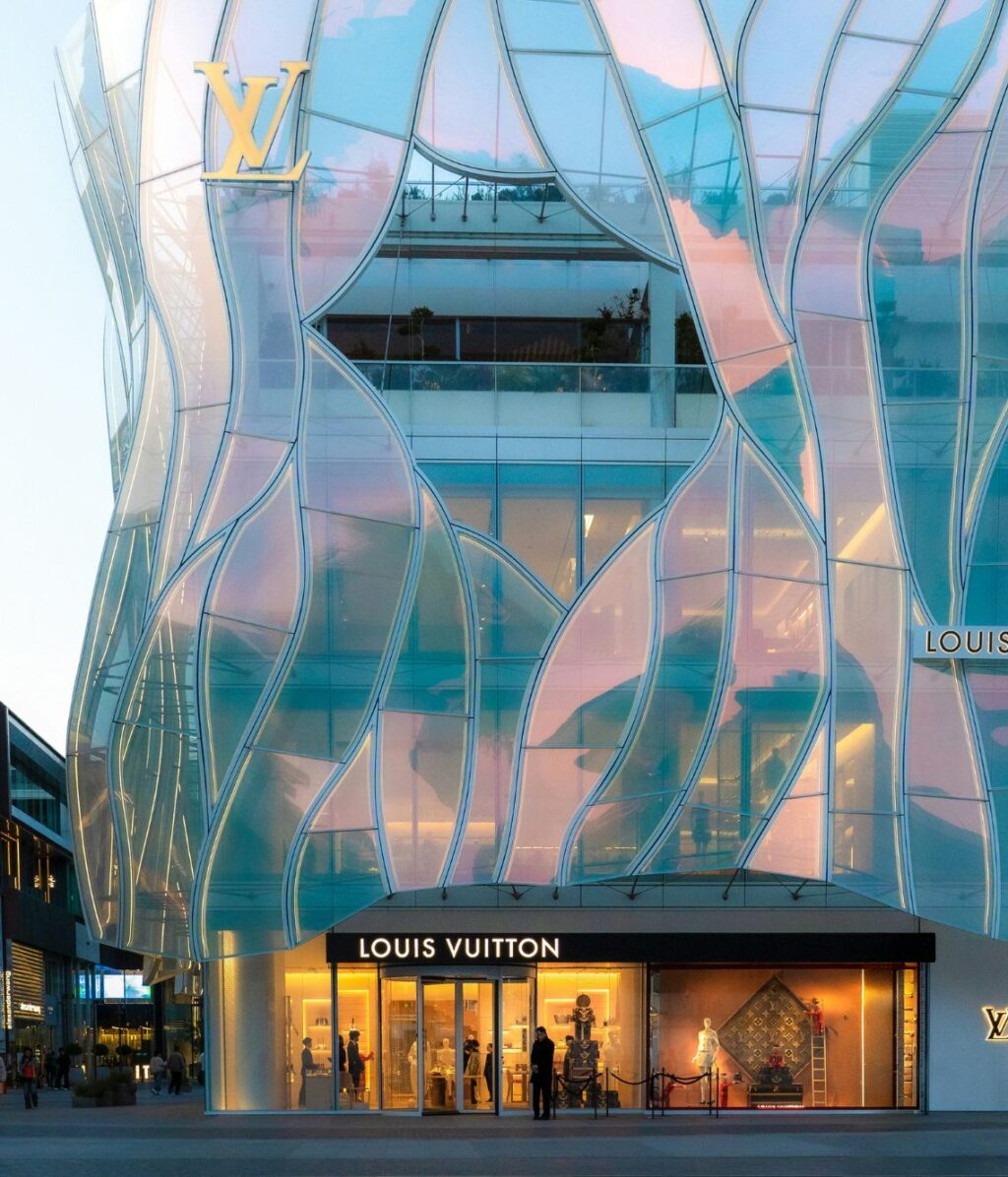
Two years ago, in a quiet room away from the noise of the Louis Vuitton high jewellery launch in St Tropez, someone put the Sewelô diamond in my hand.
It is not what you’d expect. The second largest diamond ever found at the time 1,758 carats – pulled from the Karowe mine in Botswana in 2019 isn’t white – it’s coal black. It came out of the ground sheathed in a layer of carbon and it has never been cut. It is heavy, dense, dark, strange and completely unpolished. When I held it, it felt like a meteorite. In the Riviera it was tucked away in a quiet room, away from the launch unnoticed by most of the other journalists. The reason it was there was to make a point about the Maison associated with it.
Eleven weeks after that morning, the same mine unearthed an even bigger successor. The Motswedi weighed 2,492 carats when it was recovered and 2,488 carats after samples were removed for analysis. Now the second largest diamond in history behind only the Cullinan is the subject of this weekend’s Sunday Times Magazine cover story, which asks whether one colossal stone can “bring back the sparkle” to an industry in genuine crisis.
The Motswedi find

The facts are startling. Rough prices are down by a third in three years. De Beers lost close to half a billion dollars last year. Antwerp’s trade has halved since 2022. Botswana, which built one of Africa’s great development stories on diamonds, has voted out the party that governed it for six decades and declared a public health emergency and public infrastructure seems to be creaking.
Despite all that, one rock mined from the earth is being asked to save both a country and a global industry. The Sunday Times article ended with Oded Mansori, the Antwerp dealer tasked with selling the Motswedi, doing the maths on its value out loud. The Constellation, an 813-carat rough from the same mine, sold for $63 million in 2016. Divide it, he suggests, and multiply by the price per carat: $63 million over 813 carats; multiply by 2,488 and you arrive at roughly $193 million, or close to £144 million for the Motswedi.
Read about when it was discovered in 2024
It’s an exciting calculation and even more startling numbers. However, given the recent pricing with mega stones it’s not a mathematic formula that can be trusted. The reason is that the bigger the stone, the smaller the pool of prospective buyers. The Lesedi La Rona at 1,109 carats, larger than the Constellation, from the same mine and recovered in the same year. It went to auction at Sotheby’s in 2016 with an estimate of $70 million. Bidding stalled at $61 million. The stone went unsold, sat unsold for over a year, and was eventually bought by Graff for $53 million. If we run Mansori’s formula on that: the bigger stone achieved a lower price, absolutely and per carat of around $48,000 a carat against the Constellation’s $78,000.

Of course there were differences in quality and potential yield, which is precisely why multiplying carat weight by the price achieved for another stone is so unreliable. The price ladder does not extend constantly upwards. Past a certain size, it can invert, because the buyer pool collapses to a handful of people or entities, and every one of them knows it, and their competition. A stone with five possible buyers is not priced by multiplication. It is priced by whichever of those five blinks first, or doesn’t.
The Sewelô diamond

Which brings us back to that black rock in St Tropez because what has happened to the Sewelô since its discovery tells us more than any theoretical valuation. When Louis Vuitton entered into a collaboration with Lucara and HB Antwerp over the Sewelô in 2020, the stated intention was to cut it. Lucara retained a 50 per cent interest, with Louis Vuitton and HB Antwerp sharing the remainder, and the stone was supposed to yield a collection of bespoke diamonds for Louis Vuitton clients.
Six years later, however, its most visible life has not been as jewellery but as an object in itself. The Sewelô went on tour. It sat in the Maison’s exhibition space in Paris. It travelled to launches. It was placed in my hands and the hands of other editors on the Côte d’Azur.
Perhaps it will still be cut. But while its eventual yield remains largely invisible, the rough stone has already done years of priceless work for Louis Vuitton. It’s given the Maison something no campaign could manufacture: an object that’s more than two billion years old, unrepeatable and intimately associated with its name.
Even the text description in St Tropez acknowledged that “the full extent of variations in colour and clarity of the diamond yield is still unknown”. The uncertainty was not an embarrassment. It was part of its attraction. They were not showing us the yield. They were showing us the mystery of the rock.
There is a detail in the naming that says everything. Sewelô means “rare find” in Setswana. Motswedi means “water spring” or “source”, chosen to symbolise renewal. Six years after plans to transform the stone named Rarity into jewellery were announced, it remains best known in the form nature made it. The industry is now asking the stone named Renewal to save it. The Setswana has the argument right: rarity is a fact you can possess; renewal is a hope you can only price.
The Sunday Times describes the Sewelô, accurately, as sitting in Paris “essentially as a marketing piece”. I would go further: whatever its eventual fate at the cutting wheel, its public life has already demonstrated that at the very top of this market, the rough diamond can become something beyond a gemstone. It becomes an artefact.
The Motswedi may be heading the same way, and the signals are in plain sight. Lucara’s chief executive has said that some of the parties circling the stone, museums among them, want it in the rough. They do not want to polish it. The industry’s flagship stone may never enter the jewellery value chain at all. That would not be a rescue of the diamond trade. It would be a departure from it.
Are lab grown diamonds killing the industry?
None of which means the doom-mongering is right either. The most important line in the Times piece is not about the Motswedi at all, it is the analysts’ observation that the market has gone K-shaped.
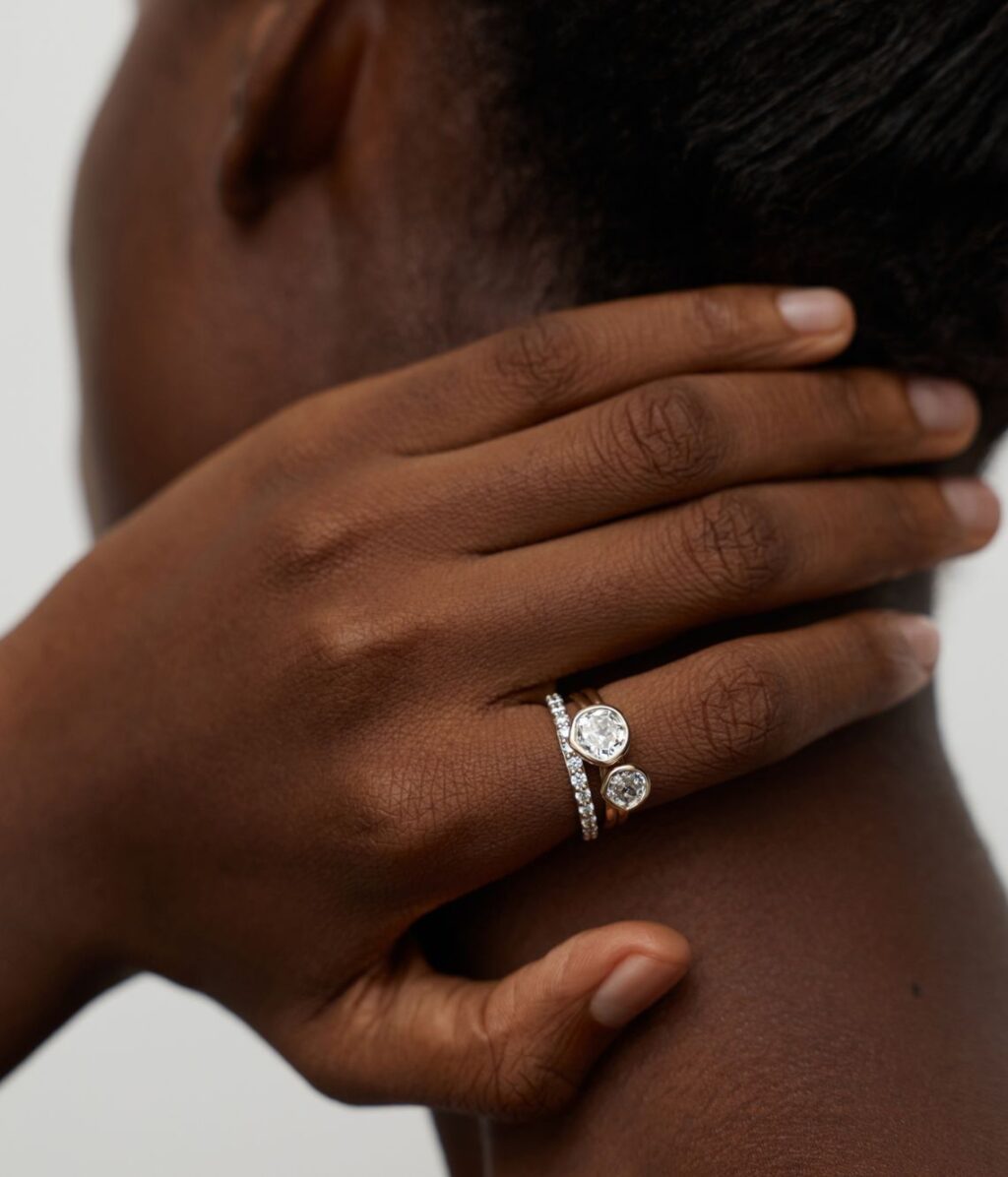
The small stones market appears to be in genuine collapse: lab-grown pendants now retail in a Dutch discount chain for €29.99, and De Beers’ own lab-grown venture shut after wholesale synthetic prices fell 90 per cent. But large natural stones have slipped just five to ten per cent in three years and have been ticking upwards since January. What I noticed on the floor at JCK earlier this year is that larger stones are celebrated and seen as the pinnacle of luxury, while the market for smaller stones, those below two carats are now wanted by consumers seeking lab grown diamonds. Antique diamonds are also surging. Look to celebrity engagement trends –Taylor Swift wears an old mine brilliant, which moved Signet jeweller’s share price on sentiment alone. The two halves of the market are no longer the same market. They’re operating in different sectors.
This is the pattern I’ve been tracing all year, from the Las Vegas trade floors (see my trend analysis here) to the Paris high jewellery season: when reproduction becomes trivial, the industry retreats to the irreplaceable. The bottom of the K is being commoditised out of existence. The top is being re-founded on rarity, provenance and story, the things a vacuum chamber cannot grow.
So no, a 2,488 carat rock cannot save the diamond industry, and the honest version of the question was, it was never really about saving it. The Motswedi is not the cure for the split. It is the most spectacular symptom of it. It’s a stone so rare it may escape the trade altogether, moving from gemstone to museum object, just as its black predecessor has spent six years threatening to do.
I held that predecessor for a minute or two on a June morning in St Tropez. What I remember is not the sparkle. There really wasn’t any. What I remember most is the weight.
Like this? Richemont’s Jewellery Boom Isn’t Luck: It’s Pricing
Want the latest jewellery news? Sign up to our newsletter
Sources: Sotheby’s 2016 auction of the Lesedi La Rona; Lucara Diamond Corp and Graff announcements, 2017; Lucara announcements on the Constellation sale, 2016, and Motswedi recovery, 2024; William Lamb interview, Financial Mail, 2025; The Sunday Times, “Can a giant 2,488-carat gem bring back the sparkle?” by Richard Assheton, 2026.